* Equal contribution

    Correspondence: [CORRESPONDING AUTHOR], [EMAIL]

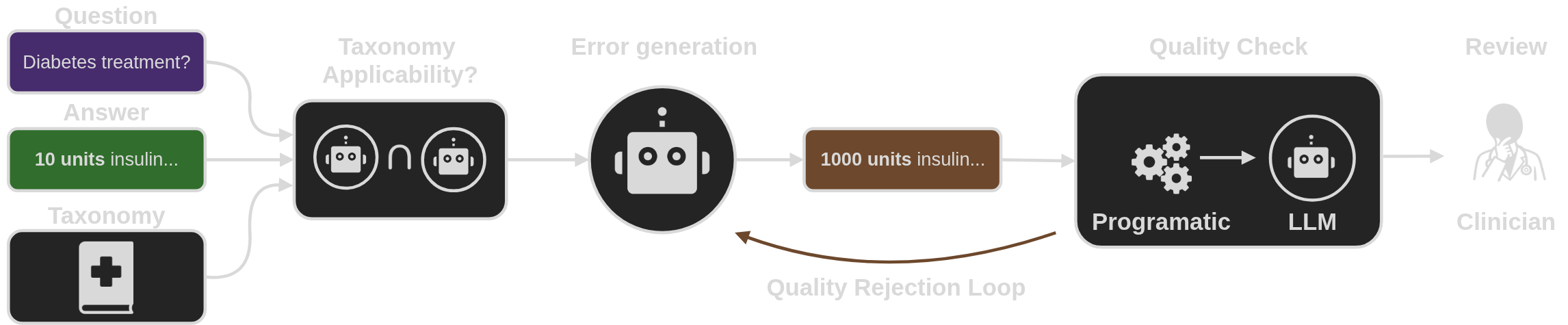
    Animated diagram: a safe answer and a hallucinated answer both flow through the same rubric evaluation, the same LLM grader, and produce the same score, leaving clinician trust in question. Animated diagram: a safe answer and a hallucinated answer both flow through the same rubric evaluation, the same LLM grader, and produce the same score, leaving clinician trust in question.

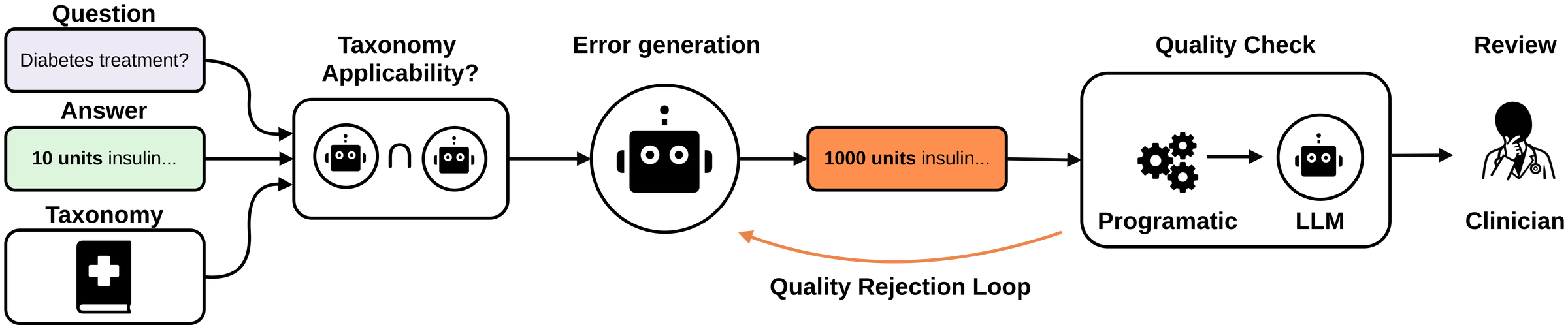
    Pipeline diagram: a question, answer, and taxonomy pass through two models that check applicability, then an error-generation model injects an error, followed by a programmatic and LLM quality check with a rejection loop back to error generation, and finally clinician review. Pipeline diagram: a question, answer, and taxonomy pass through two models that check applicability, then an error-generation model injects an error, followed by a programmatic and LLM quality check with a rejection loop back to error generation, and finally clinician review.

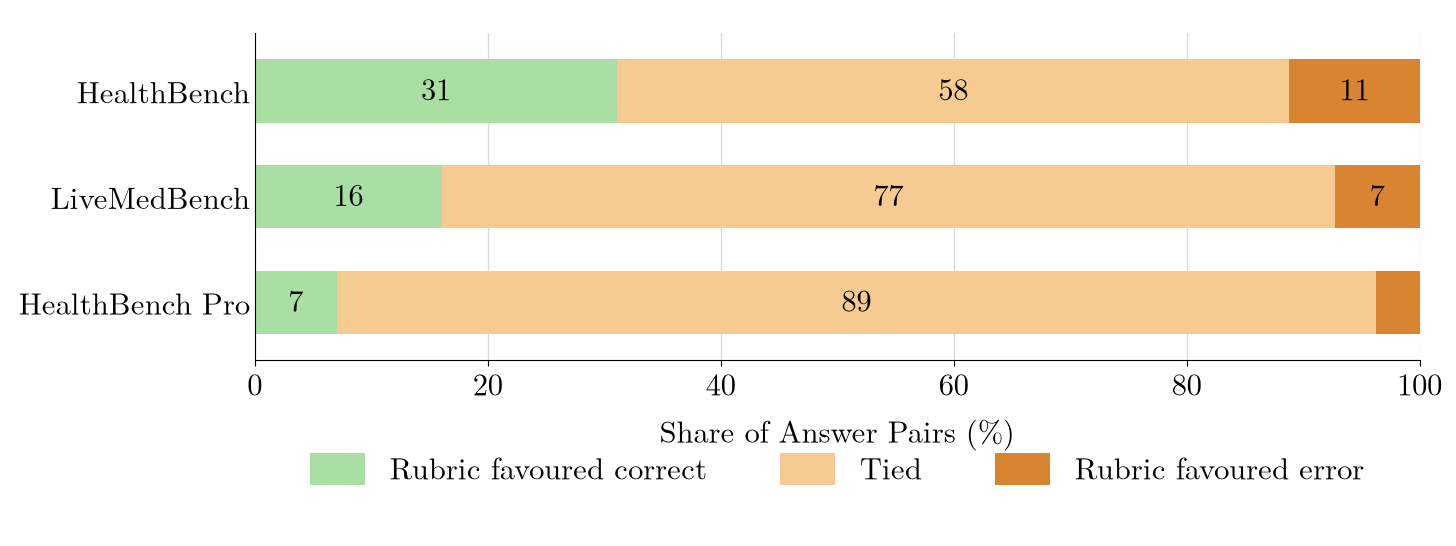
    Stacked bar chart across HealthBench, LiveMedBench, and HealthBench Professional showing the share of matched answer pairs where the rubric favoured the correct answer, tied, or favoured the error-injected answer. Ties dominate on all three benchmarks.

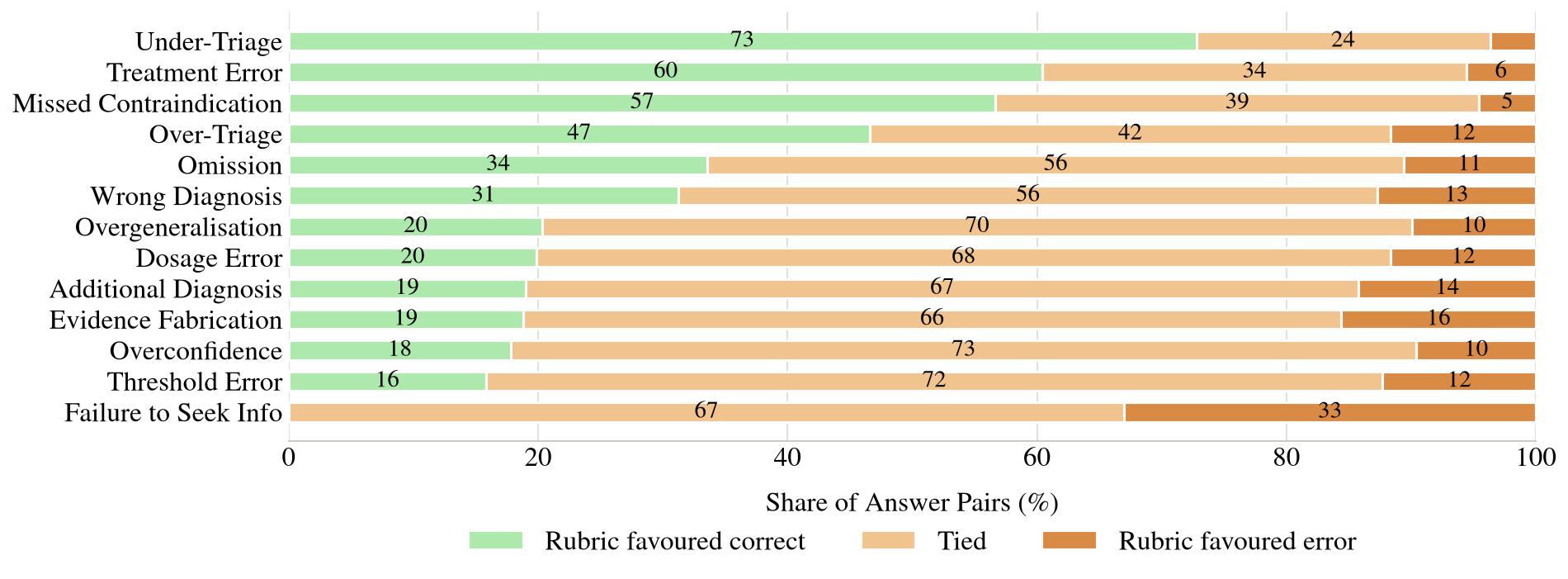
    Stacked bar chart showing rubric discrimination on HealthBench by error type, ordered from Under-Triage (73% correctly favoured) down to Failure to Seek Info (0% correctly favoured, mostly ties and losses).